What & Why
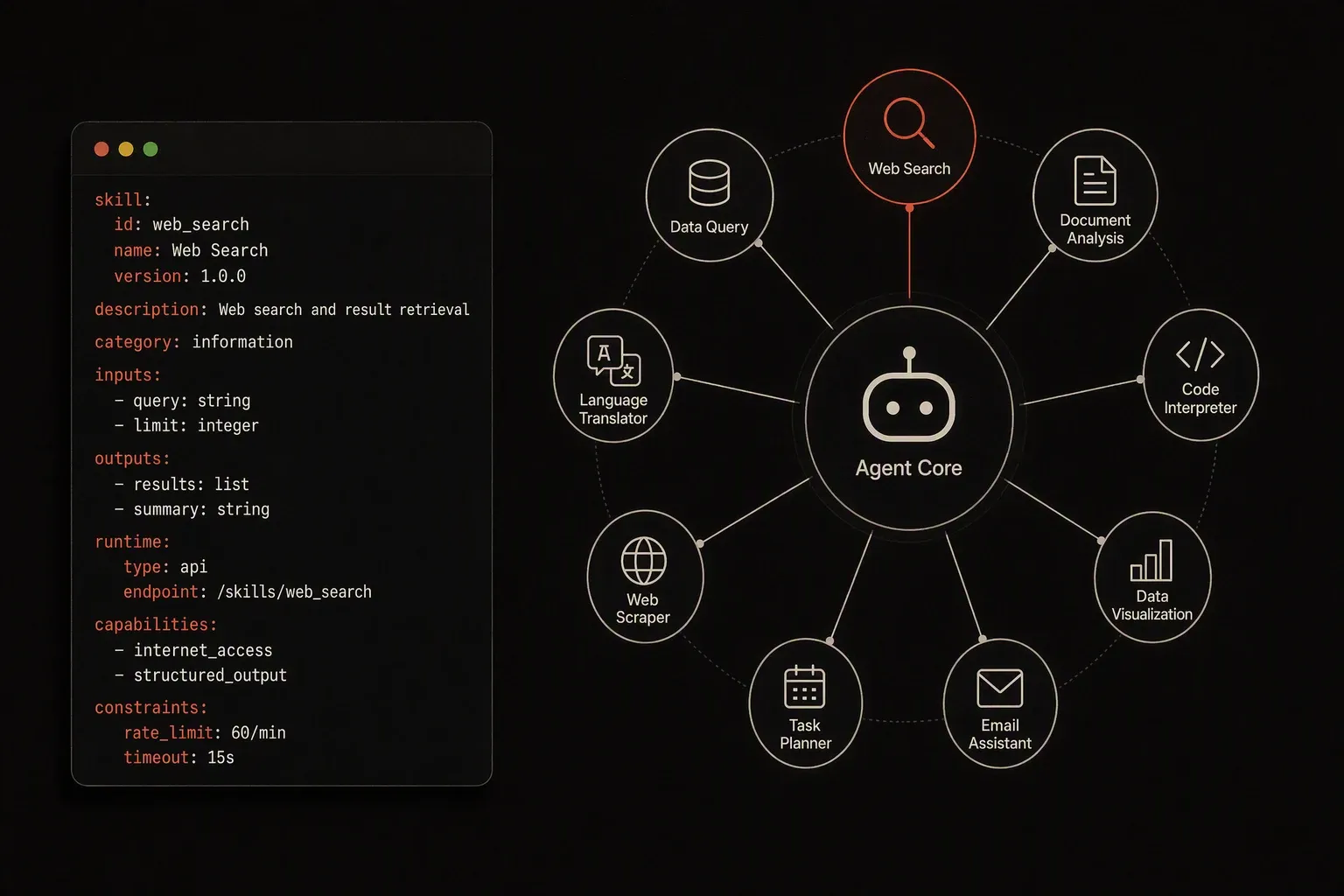
OpenClaw's skill system lets you extend the agent's behavior with domain-specific instructions, tools, and workflows. Rather than re-explaining how to use a tool every time, a skill packages the knowledge permanently. This collection covers the domains I interact with most: personal productivity, multi-agent work, infrastructure, and code review.
Key Features (Skills)
| Skill | What It Does |
|---|---|
| ADHD Assistant | Evidence-based daily planning, task breakdown, time management, dopamine regulation, body doubling — ADHD-friendly scaffolding for executive function |
| Agent Orchestrator | Meta-agent that decomposes macro tasks, spawns parallel sub-agents with dynamically generated SKILL.md files, consolidates results |
| Mermaid Architect | Generates Mermaid diagrams with robust syntax (quoted labels, ELK layout) — flowcharts, sequence, class, state diagrams |
| Senior Architect | System design reviews, ADRs, tech stack evaluation, monolith vs microservices decisions, dependency analysis |
| Coding Agent | Delegates coding tasks to Codex/Claude Code/Pi via background PTY process — handles feature builds, PR reviews, refactors |
| Adaptive Suite | Multi-domain adaptive skill: coder, analyst, PM, web dev, data analyst — discovers free tools/APIs and adapts to context |
| Uptime Kuma | Manages Uptime Kuma monitors via Socket.IO API — check status, add/remove monitors, view heartbeat history |
| Webhook | Secure webhook receiver/sender patterns: HMAC verification, replay prevention, retry logic, idempotency |
| Mission Control | Dashboard control skill — integrates Mission Control into the agent's operational loop |
Standout: Agent Orchestrator enables true parallel workloads — the agent splits a complex task into N sub-agents, each with its own generated SKILL.md, runs them concurrently, and consolidates. This is what powers the current case study generation task itself.
Tech & Implementation
Stack: Markdown (SKILL.md spec) · YAML frontmatter · Bash/Python scripts (where applicable) · OpenClaw skill loader
Notable design principle: Each skill follows the OpenClaw SKILL.md spec — structured metadata (name, description, compatibility, tags) plus prose instructions the agent reads at runtime. The description field doubles as the trigger condition: if the description matches user intent, the skill loads. This makes authoring skills essentially prompt engineering + documentation.
Outcome
All 9 skills are active in daily use. The Agent Orchestrator skill enabled parallel execution of complex multi-file tasks (like this portfolio build). The ADHD Assistant is used weekly for planning. Senior Architect and Coding Agent have been used in multiple production projects. Demonstrates deep understanding of the OpenClaw skill architecture and ability to extend AI agent capabilities systematically.
Agent Orchestrator Flow
flowchart TD
    User["User Request"] --> Orchestrator["Agent Orchestrator"]
    Orchestrator --> Decompose["Decompose into subtasks"]
    Decompose --> A1["Sub-agent 1\n(dynamic SKILL.md)"]
    Decompose --> A2["Sub-agent 2\n(dynamic SKILL.md)"]
    Decompose --> A3["Sub-agent N\n(dynamic SKILL.md)"]
    A1 --> Consolidate["Consolidate Results"]
    A2 --> Consolidate
    A3 --> Consolidate
    Consolidate --> Output["Deliver to User"]